
Magnetic water is water that has been passed through a magnetic field. Magnetic water treatment devices are environmentally friendly, with low installation costs and no energy requirements. Magnetic water can be used to increase crop yield, induce seed germination and benefit the health of livestock. Magnetic water treatment is currently used in Australia, Bulgaria, China, England, Japan, Poland, Portugal, Russia, Turkey and the United States for these purposes (Qados and Hozyan, 2010 and Hozayn and Qados, 2010). It is believed that magnetic water used for irrigation can improve water productivity (Duarte Diaz et al., 1997), and has been shown to use 20% less water with the same results as non-treated water on turfgrass (Olds College for TurfGrass Management, Canada; MacKenzie, Johb, Plantje, 2014), thus conserving water supplies for the expected future global water scarcity. Magnetic water has also been found to be effective at preventing and removing scale deposits in pipes and water containing structures. Magnetically treated water also can increase the levels of CO2 and H+ in soils comparable to the addition of fertilizers. Cleaning agents have an increased effectiveness when combined with the power of magnetic water, and the amount of cleaner used can be reduced by one-third to one-fourth (Kronenberg, 1993).
Reduction in Water Use by 20%
An independent controlled study conducted by Olds College in Canada; (MacKenzie, Johb, Plantje, 2014) treated irrigation water with magnetic water in a greenhouse environment, with the control group remaining untreated. Results show the same effect is achieved while using 20% less irrigation water when treated, for a total of 80% water application, as compared to the controlled amount of 100% normal water application.
Approximately 2.08 billion gallons of water are used everyday to irrigate golf courses in the United States. (Lyman, 2012). A 20% reduction equals an astonishing savings of 416 million gallons daily.
Improved Soil Permeability and Moisture Retention
An independent controlled study on American soils utilized PureSense® data to show MAgnetic water softener system, increased soil permeability and moisture retention in problematic, salty soils at 12 inches, 24 inches, 36 inches, 48 inches, and 60 inches deep over a 7-day observation period. Improved soil moisture increased at every depth, which was never achieved prior to installing magnetic water systems.
Soil Salinity and Permeability
Magnetic treatment of saline irrigation water can be used as an effective method for soil desalinization. The application of a magnetic field on water decreases the hydration of salt ions and colloids, having a positive effect on salt solubility, accelerated coagulation and salt crystallization. Field experiments showed that, sandy loam soil pots irrigated with normal highly saline water of an electrical conductivity value of 8.2 mmohs/cm retained salts compared to pots irrigated with magnetized saline water. The study showed that magnetic water increased leaching of excess soluble salts, lowered soil alkalinity and dissolved slightly soluble salts (Hilal and Hilal, 2000).
Water becomes degassed in the process of being magnetized and this degassing increases soil permeability, which creates an increase in irrigation efficiency (Bogatin et al., 1999). In addition to soil permeability, magnetic water interacts with the structural calcium in cell membranes, making the cells more permeable. The reduced surface tension observed in magnetic wate results in better infiltration of water and a reduction in water and chemical use. (Goldsworthy et al., 1999)
Improved Water Flow and Energy Efficiency
Controlled study shows magnetic water technology increased the water flow from 450 gallons per minute to 510 gpm. Just as favorable, it also decreased it’s pump intake pressure from 100 to 90 psi, pump discharge pressure from 130 to 120 psi, and the pump work rate from 700 to 600 psi.
Hard Water | Scale Removal and Prevention
Magnetic treatment directly influences the carbonate equilibrium in water, leading to the formation of calcium carbonate (CaCO3) particles in solution that then cannot precipitate on pipe walls and other equipment. Patented in 1945 (Vermeiren), magnetic water can be used to prevent and remove scale and is currently common global use of this water technology.
Magnetic Treatment of Water Prevents Mineral Build-up C. Jack Quinn, Professor Emeritus, Purdue University, Fort Wayne, Ind., T. Craig Molden, President, Molden Associates, Inc., Michigan City, Ind., and Charles H. Sanderson, Project Engineer—Superior Manufacturing Div., Magnatech Corp., Fort Wayne, Ind., 1997
Non-Chemical Technologies for Scale and Hardness Control U.S. Department of Energy. 1998. Federal Technology Alert. DOE/EE-0162, U.S. DOE Pacific Northwest National Laboratory, 22pp.
The Effect of Magnetic Field on Water Hardness Reducing H. Banejad and E. Abdosalehi, Irrigation Dept. Agriculture Faculty, Bu_Ali Sina University, Hamedan, Iran, 2009 Thirteenth International Water Technology Conference, IWTC 13 2009, Hurghada, Egypt
Effects of Magnetized Water on Soil Sulphate Ions in Trickle Irrigation Behrouz Mostafazadeh-Fard, Mojtaba Khoshravesh, Sayed-Farhad Mousavi, and Ali-Reza Kiani 2011 2nd International Conference on Environmental Engineering and Applications IPCBEE vol.17 2011
Effects of Magnetic Field on Calcium Carbonate Precipitation in Static and Dynamic Fluid Systems Nelson Saksono, Achmad Fauzie, Setijo Bismo, and Roekmijati W S. Department of Chemical Engineering, Faculty of Engineering, University of Indonesia, Kampus UI – Depok 16424 Indonesia 14th Regional Symposium on Chemical Engineering 2007 ISBN 978-979-16978-0-4
Effects of Magnetic Field on the Crystallization of CaCO3 Using Permanent Magnets Clifford Y. Tai∗, Chi-Kao Wu, Meng-Chun Chang Department of Chemical Engineering, National Taiwan University, Taipei, Taiwan 2008 Elsevier
Improved Seed Germination Rate
The application of a magnetic field has been shown to induce seed germination, and increase the percentage of germinated seeds. Carbonell et al. (2000) showed an increase of the germination rate and percentage of rice seeds treated with a magnetic field. Moon and Chung (2000) treated tomato seeds with a magnetic field and found that germination rates were accelerated about 1.1–2.8 times when compared to the control seeds. Germination of broad bean seeds was found to take place 2-3 days earlier when seeds underwent magnetic treatment (Podleoney et al., 2004).
Carbonell, M.V., E. Martinez, J.M. Amaya. 2000. Stimulation of germination in rice (Oryza sativa L.) by a static magnetic field. Electro-Magnetobiol, 19(1):121-128.
Faten Dhawi, Jameel M. Al-Khayri, and Essam Hassan, Saudi Arabia, 2009 Static Magnetic Field Influence on Elements Composition in Date Palm Research Journal of Agriculture and Biological Sciences, 5(2): 161-166, 2009
Increased Crop Yield
Magnetized water has been reported to triple seedling emergence of wheat (Hilal and Hilal, 2000). Reina et al. (2002) reported a significant increase in the rate of water absorption and an increase in total mass of lettuce when treated with magnetized water. Chickpea plants irrigated with magnetized water grew taller and heavier than plants irrigated with tap water (Hozayn and Qados, 2010). The authors attribute this stimulation to an increase in photosynthetic pigments, where the magnetic water induces cell metabolism and mitosis meristematic cells in pea, lentil and flax (Belyavskaya, 2001). Additionally, it is believed that new protein bands are formed in plants that are treated with magnetized water and that these proteins are responsible for increased growth (Hozayn and Qados, 2010). Magnetized water has been linked to increases in photosynthetic pigments, endogenous promotors, total phenol and protein biosynthesis in plants. (Qados and Hozayn, 2010 and Shabrangi and Majd, 2009).
Maheshwari, B.L. and H.S. Grewal. 2009. Magnetic Treatment of Irrigation Water: Evaluation of its Effects on Vegetable Crop Yield and Water Productivity. Agricultural Water Management, 96(8): 1229-1236. Elsevier International Peer Review
Further controlled studies show the following results on varying crops:

Livestock
Dairy cows that drink magnetized water have shown an increase in milk production with the same amount of milk fat as present in cows drinking ordinary water. They also have a longer lactation period with fewer non-productive days and overall health is better (Lin and Yotvat, 1990). Levy et al. (1990) demonstrated that young male cattle watered with magnetized water increased their dry feed intake, while improving their digestion and nitrogen retention.
Piglets watered with magnetized water drank twice as much water, and grew 12.5% larger than the control group (Kronenberg, 1993).
Chickens watered with magnetized water grew larger, with an increase in the meat to fat ratio, and experienced reduced mortality rates (Gholizadeh et al., 2008). Also, poultry have showed an increase in egg production when watered with magnetized water (Lin and Yotvat, 1990)
1M. Gholizadeh, H. Arabshahi, M.R. Saeidi, and B. Mahdavi; Iran 2008, The Effect of Magnetic Water on Growth and Quality Improvement of Poultry, Middle-East Journal of Scientific Research 3 (3): 140-144, 2008
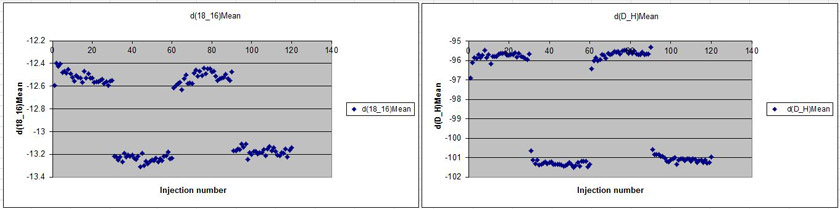
Isotopic Geochemical Shifts by Magnetic Water Technology Process
The effect of our magnetic systems on making matter lighter or smaller on subatomic levels include chlorides and nitrates. Have a look at the dramatic shift in the image below.
Key Takeaways from Current Research
Decades of peer-reviewed research across agriculture, water chemistry, and biological sciences have established several consistent findings about magnetic water treatment:
Recent Research Highlights (2020–2025)
The following summaries highlight significant peer-reviewed studies published in the last five years that advance our understanding of magnetic water treatment across multiple sectors.
Systematic Reviews & Meta-Analyses

Moussa, Zarai & Hachicha (2024) — Euro-Mediterranean Journal for Environmental Integration
A comprehensive systematic review analyzing the theoretical basis and documented effects of magnetic water treatment. The authors found that magnetic treatment consistently alters water’s bacteriological, chemical, and physical characteristics, though the precise mechanisms remain under investigation. The review synthesized findings across agriculture, scale prevention, and biological applications.
Minoretti et al. (2024) — Cureus
A narrative review covering both agricultural and clinical applications of magnetized water. The authors describe how magnetic field exposure alters water’s hydrogen bonding structure, resulting in increased pH, electrical conductivity, and dissolved oxygen, alongside decreased surface tension and density. The review highlights promising applications in wound healing, autophagy stimulation, and agricultural productivity.
Bali (2025) — Euro-Mediterranean Journal for Environmental Integration
A focused review on magnetic water treatment for calcium carbonate scale prevention. The analysis covers effects on water chemistry, particle behavior, and crystallization processes, assessing the reliability of magnetic treatment as a sustainable solution to industrial and residential scaling problems.
Agriculture & Crop Studies
Abdelfattah et al. (2025) — Scientific Reports (Nature)
Studied the synergistic effects of magnetic water treatment and mulching on strawberry production under saline conditions. Magnetic treatment of brackish water combined with soil mulching significantly enhanced crop growth, productivity, and improved soil moisture-salinity distribution — demonstrating practical benefits for growers facing water quality challenges.
Putti et al. (2023) — Horticulturae (MDPI)
Investigated magnetic water treatment on lettuce across different irrigation rates. Results showed that magnetically treated water improved nutrient absorption and water use efficiency, offering a technological alternative for achieving high yields with lower fertilizer costs and reduced water consumption.
Kishore et al. (2023) — Water Reuse (IWA Publishing)
Tested magnetic treatment on normal, waste, and saline water for French bean cultivation using a 7,000 Gauss magnet. Treatment enhanced yield by 12.7% for normal water, 16.9% for wastewater, and 20.07% for saline water compared to untreated controls — with the greatest benefits seen in the poorest quality water.
Noran et al. (2020) — BMC Plant Biology
Documented the impact of magnetically treated water on tobacco growth and development. The study provided detailed measurements of growth parameters including plant height, leaf area, and biomass accumulation, with treated plants showing significant improvements across multiple metrics.

Seed Germination & Seedling Development

Sestili et al. (2023) — Frontiers in Plant Science
Examined the effects of magnetized water on lentil and durum wheat seedling development and metabolite profiles. Using water passed through a 12,900–13,200 Gauss magnetic device, the study found that magnetic treatment significantly increased root elongation in both species and altered metabolic profiles, providing molecular-level evidence for the biological effects of treated water.
Zhang et al. (2022) — Plants (MDPI)
Investigated magnetic water treatment as an eco-friendly approach to alleviating salt stress during cotton seed germination and early seedling growth. The study compared fresh and brackish magnetized water, finding that magnetic treatment improved seed water absorption, germination rates, and photosynthetic characteristics even under saline conditions.
Alattar, Elwasife & Radwan (2021) — AIMS Biophysics
Studied the effects of magnetic water on corn (Zea mays) growth using three magnetic intensities. Corn plants watered with magnetized water showed significantly higher shoot length and dry weight, with the optimal configuration producing 194 cm plant length and 52 g dry weight compared to untreated controls.
Scale Prevention & Water Chemistry
Ling et al. (2020) — npj Clean Water (Nature)
A critical review of electromagnetic field applications for scaling control in water systems. The key conclusion: electromagnetic fields facilitate bulk precipitation of crystals rather than adhesion to pipe walls and vessel surfaces. The review analyzed standardization challenges and identified the variables that affect treatment consistency, including pipe material, water chemistry, and field configuration.
Martínez & Boluda (2021) — Water (MDPI)
Reviewed magnetic and electromagnetic techniques for carbonate scale prevention. The authors found that magnetic treatment reduces dissolved CO₂ content and surface tension, altering the shape and size of calcium carbonate crystals to prevent their adhesion to surfaces as hard scale. The formation of aragonite instead of calcite was identified as a primary mechanism.
Sánchez et al. (2025) — Water (MDPI)
Evaluated magnetic water treatment potential for calcium carbonate scale mitigation in drinking water distribution networks. The study highlighted the critical role of optimizing magnetic field alignment and gradient strength for effective treatment, using both experimental analysis and finite element modeling simulations.
Water Properties & Physical Effects
Scientific Reports (2025) — Nature
Tested magnetic devices at two intensities (1,600 and 14,500 Gauss) on three water salinity levels. Under magnetic treatment, water exhibited reduced viscosity, reduced surface tension, reduced microbial count, and altered dissolved oxygen levels. The study provided detailed quantitative measurements of physical property changes across different treatment intensities.
European Physical Journal Plus (2021)
Investigated surface tension changes in water under magnetic field effects at three intensities (0.10, 0.15, and 0.20 Tesla). Results showed reduced surface tension and viscosity, with increasing activation energy and decreasing intramolecular energy — providing a physical mechanism for the improved soil penetration observed in agricultural studies.
Health & Biological Applications
Lee & Kang (2013) — Nutrition Research and Practice
Studied magnetized water supplementation in diabetic rats over 8 weeks. The study found decreased blood glucose and glycated hemoglobin levels, along with reduced blood and liver DNA damage. The authors suggested that long-term intake of magnetized water may support both prevention and management of complications in metabolic conditions.
Drinking Water Microbiology Study (2022) — PubMed
Investigated the effect of magnetic treatment on microbiological communities in drinking water. Using flow cytometry, the study found that magnetic fields selectively promote low nucleic acid bacteria under nutrient-rich environments, indicating potential benefits for drinking water biostability and quality management.
Research Bibliography
The following peer-reviewed studies and academic publications document the effects of magnetic water treatment across agriculture, scale prevention, water properties, plant growth, and health. Studies are organized by topic and linked to their original publications where available.