Research conducted by Nicole Boogaers at North-West University indicates that irrigating macadamia plants with magnetized water (MWT) significantly enhances their growth, physiology, and overall propagation success. The study comprised two main trials: a greenhouse study (Trial 1) focusing on initial germination and growth, and a more extensive nursery study (Trial 2) that followed plants through to the grafting stage.
Key Findings on Plant Development
The application of magnetized water produced several measurable benefits across different growth stages:
- Increased Germination Rates: In Trial 1, MWT seeds achieved 73% germination within four weeks, compared to only 26% for the control group. This shortened the propagation timeframe by approximately three to four weeks.+1
- Enhanced Root and Stem Growth: MWT plants exhibited significantly longer roots—averaging 6.3 cm longer than the control in Trial 2—and increased stem height.
- Earlier Grafting Age: Because of faster growth, MWT plants reached grafting thickness (pencil thickness) up to two months earlier than control plants.+1
- Improved Biomass and Vitality: The average dry biomass of MWT plants was significantly higher ($42.9$ g vs. $35$ g in the control), indicating superior overall plant vitality.
Physiological and Nutrient Impacts
The study used chlorophyll a fluorescence (the OJIP-test) to measure photosynthetic efficiency.
- Photosynthetic Efficiency: MWT stimulated the flow of electrons between Photosystem II and Photosystem I, increasing the energy available for growth.
- Chlorophyll Content: MWT plants maintained significantly higher chlorophyll levels (measured in SPAD units), particularly right before the grafting stage.+1
- Nutrient Retention: Magnetized water improved the soil’s ability to retain nutrients. Analysis showed that less nitrogen ($f\text{NO}_3$) leached out of MWT soil bags during irrigation compared to the control.+2
- Optimum Nutrient Levels: MWT plants were found to be within the optimum range for Manganese (Mn) levels, whereas the control group was far above the optimum, risking toxicity.
Comparison of Propagation Success
| Metric | Trial 1 (Greenhouse) | Trial 2 (Nursery) |
| Grafting Success | N.A. | 87% (MWT) vs. 76% (Control) |
| Total Propagation Success | 89.5% (MWT) vs. 52.4% (Control) | 91% (MWT) vs. 84% (Control) |
Conclusion: Macadamia nurseries could significantly improve plant health, quality, and economic turnover by implementing magnetic water treatment to speed up the propagation process.
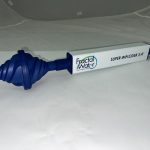
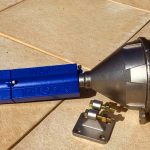
The water used in this study was magnetized using a device called the Imploder, manufactured by Fractal Water. This technology utilizes a specific arrangement of forces to restructure the water before it is used for irrigation.
Technical Specifications of the Imploder
- Device Structure: The machine consists of a pipe section 100 mm in length with an internal diameter of 22 mm.
- Magnet Arrangement: It contains two magnets arranged with their poles opposite to one another.
- Magnetic Intensity: The magnetic field intensity is measured at 5070 Gauss, with a field range between 3.5 mT and 136 mT.+1
- Nozzle Design: A unique directional nozzle ensures that water is magnetized by passing through the machine only once.
The “Implosion” Process
The device works through magnetohydrodynamics, adding electric energy to charged ions and solid particles within the water. According to the study:
- The combination of magnetic forces creates “implosion,” which sorts and phase-locks the plasmic forces of the water.
- This creates centripetal flux lines that result in a dynamic spin rate.+2
- The process ultimately leads to a smaller water cluster size, which is theorized to enhance nutrient uptake and plant metabolism.+2
The use of the Imploder to magnetize irrigation water led to significant changes in the chemical and physical properties of both the soil and the water runoff.
Soil Nutrient Changes
After ten months of growth in the nursery study (Trial 2), the soil irrigated with magnetized water (MWT) showed the following differences compared to the control:
- pH Levels: The MWT soil became more acidic, dropping to a pH of 4, while the control soil remained at pH 5.
- Electrical Conductivity (EC): There was a massive increase in EC for MWT soil, measuring 111.1 mS/m compared to just 25.7 mS/m in the control.
- Available Nutrients: The MWT soil retained significantly higher levels of essential nutrients, including:
- Nitrogen (N): 132 mg/L (MWT) vs. 11 mg/L (Control).
- Phosphorus (P): 34 mg/L (MWT) vs. 13 mg/L (Control).
- Potassium (K): 96 mg/L (MWT) vs. 37 mg/L (Control).
- Moisture Retainability: MWT soil held more moisture at 44.8 g/100 mL, whereas the control soil held 39.2 g/100 mL.
Water and Runoff Analysis
The study analyzed “clean” water before irrigation and “drained” water that leached through the soil bags:
- Nutrient Leaching: MWT significantly decreased the total amount of nutrients that leached out of the planting bags during irrigation.
- Nitrate Loss ($f\text{NO}_3$): In the drainage water, the control group lost 147 mg/L of nitrates, while the MWT group lost only 65 mg/L, meaning more nitrogen remained available for the plant.+1
- Total Dissolved Solids (TDS): The runoff from MWT plants had a much lower TDS (176 mg/L) compared to the control (408 mg/L).
Summary of Benefits
The researcher concluded that magnetized water influences ion charges in the soil to improve overall quality. By causing nutrients to bind together and form colloids, the water makes them less likely to leach away and more available for the macadamia roots to absorb.
The leaf and plant material analysis confirms that the changes in soil chemistry directly influenced the mineral balance within the macadamia plants. While the control plants tended to accumulate certain micro-nutrients to potentially toxic levels, the magnetized water treatment (MWT) plants generally maintained levels closer to the recommended optimum ranges.
Comparison of Internal Nutrient Levels
The following table compares the mineral content of the dried plant biomass at the end of the 10-month nursery study:
| Nutrient | Unit | Control | Magnetic Water (MWT) |
| Nitrogen (N) | % | 1.085 | 0.68 |
| Phosphorus (P) | % | 0.27 | 0.19 |
| Potassium (K) | % | 0.33 | 0.38 |
| Calcium (Ca) | % | 0.195 | 0.285 |
| Magnesium (Mg) | % | 0.115 | 0.155 |
| Manganese (Mn) | mg/kg | 680.5 | 230 |
| Iron (Fe) | mg/kg | 1134 | 1071.5 |
Key Observations from the Analysis
- Manganese (Mn) Regulation: The optimum range for Mn in macadamia leaves is 50–500 mg/kg. The control plants were far above this range, while the MWT plants were comfortably within the healthy optimum. High Mn levels can lead to toxicity and delayed physiological efficiency.+3
- Enhanced Calcium and Potassium: MWT plants showed higher levels of Calcium (Ca) and Potassium (K). Potassium is essential for water absorption, regulating the opening and closing of leaf stomata, and synthesizing proteins and carbohydrates.+1
- Micro-nutrient Usage: Interestingly, several micro-nutrients (N, P, Fe, Zn, Mn) were lower in the MWT plant tissue than in the control. The researcher suggests this is because the faster-growing MWT plants were consistently using up more of these nutrients to support their increased metabolic rate and vitality.+2
- Chlorophyll Formation: Although Nitrogen (N) levels in MWT leaves were below the typical optimum, the plants exhibited higher chlorophyll content and better photosynthetic efficiency, likely due to the stimulating effect of the magnetic field on cell metabolism.+2
The researcher concludes that irrigating macadamia plants with magnetized water is a “green technology” that significantly enhances growth and plant health. By restructuring water and altering ion charges, the treatment creates a more efficient biological environment for the plants to thrive.
Final Conclusions
- Improved Plant Vitality: Magnetized water leads to faster photosynthetic activity and overall increased plant vitality.
- Propagation Efficiency: MWT enhances germination success, results in stronger root systems, and significantly speeds up the growth rate.+1
- Soil and Nutrient Optimization: The treatment improves soil quality, increases water retainability, and decreases the leaching of vital nutrients from planting bags.+1
- Economic Benefit: For nurseries, the faster growth leads to an earlier grafting age, allowing plants to be sold to customers sooner while maintaining higher quality.+2